API Keys
Issue a credential, decide what it may do, rotate it without an outage, and
withdraw it when somebody leaves — without editing a file or restarting anything.
- Keys are stored hashed: a secret is shown once at creation and can never be read back.
- Rotation keeps the old secret alive for a grace window, so nothing breaks mid-swap.
- Interactive users sign in through your own identity provider instead — any OIDC issuer (Entra ID, Okta, Keycloak) — so people and machines each get the credential shape that fits them.
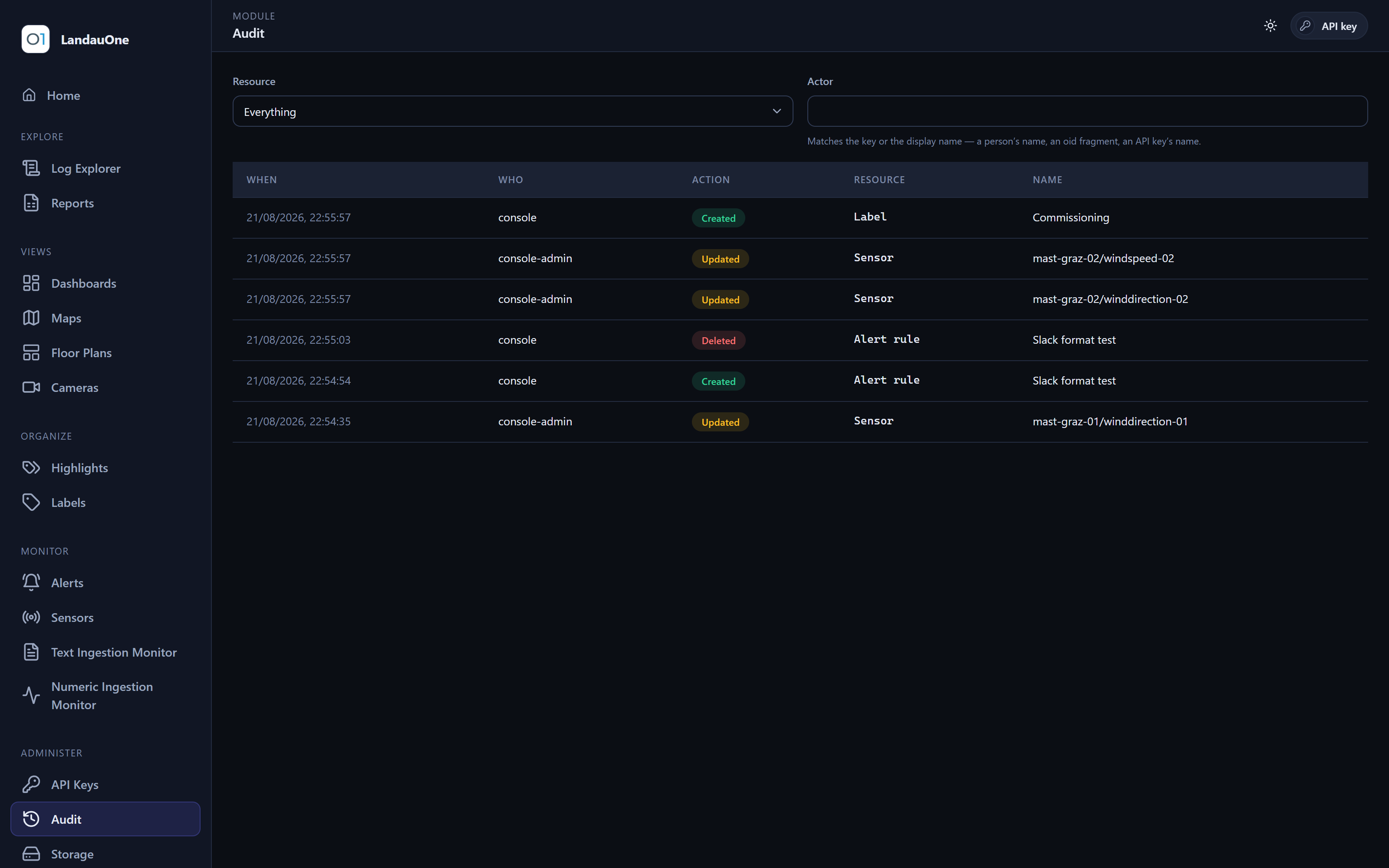
Audit
Who changed what, estate-wide: every configuration change — dashboards, alert
rules, sensors, keys, cameras — attributed to the signed-in user or key.
- Written in the same database transaction as the change itself: no audit row without the edit, no edit without its row.
- Read-only by construction, filterable by resource and actor — the answer a security review asks for on day one.
- Bounded like everything else: entries age out under their own retention window.
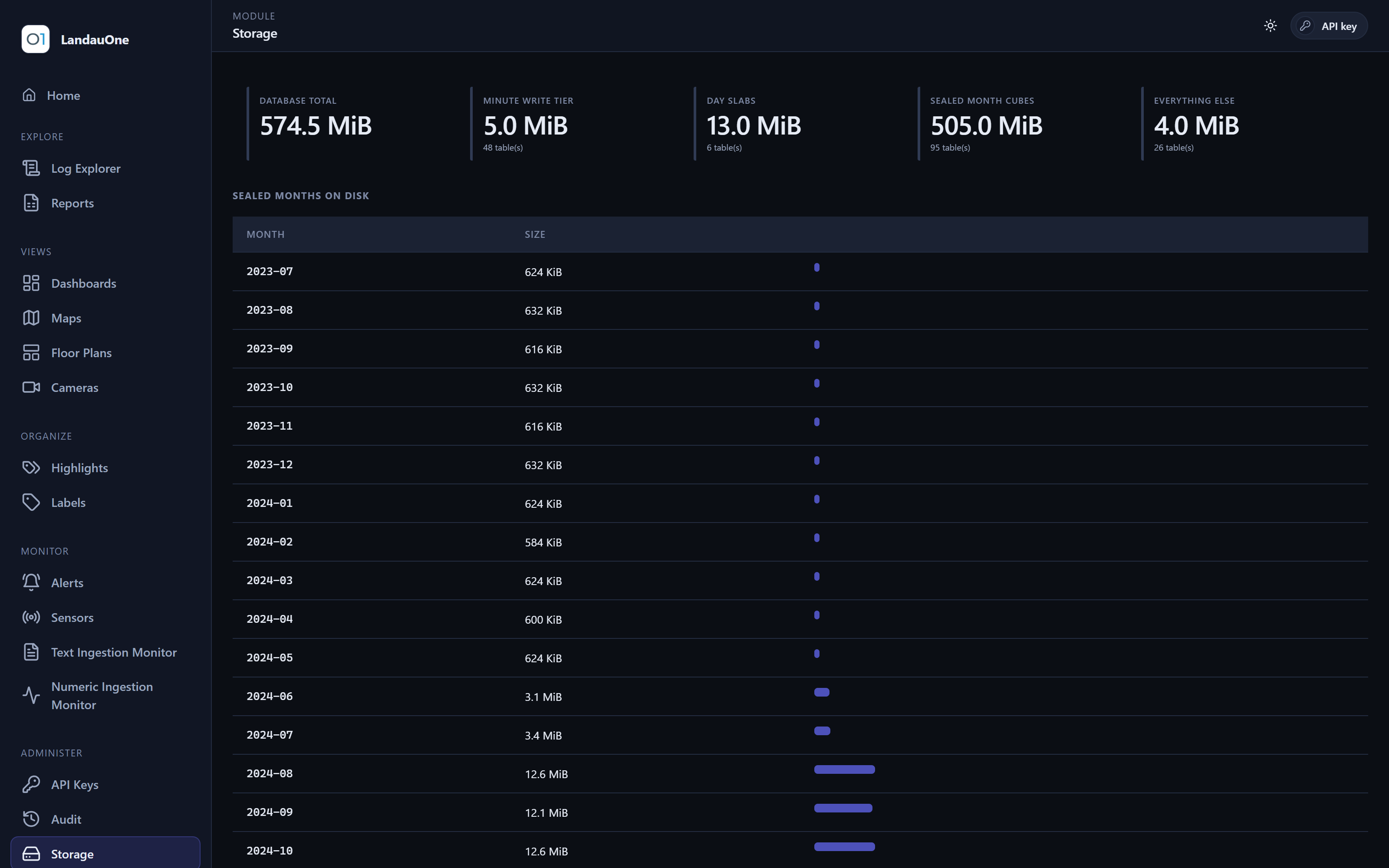
Storage
How much disk the estate uses and where it sits — write tier, day slabs, sealed
month cubes — with growth measured, not guessed.
- The per-month cost of history is read off the sealed months you already have, and projected forward.
- The retention policy in force is shown beside the usage it bounds, so "how big in a year?" has an answer.
- Read-only on purpose: retention levers stay in reviewed configuration, not behind a click.